
Why Exercise Doesn't Work the Way It Used To After 40 (And What Your Body Is Actually Asking For)
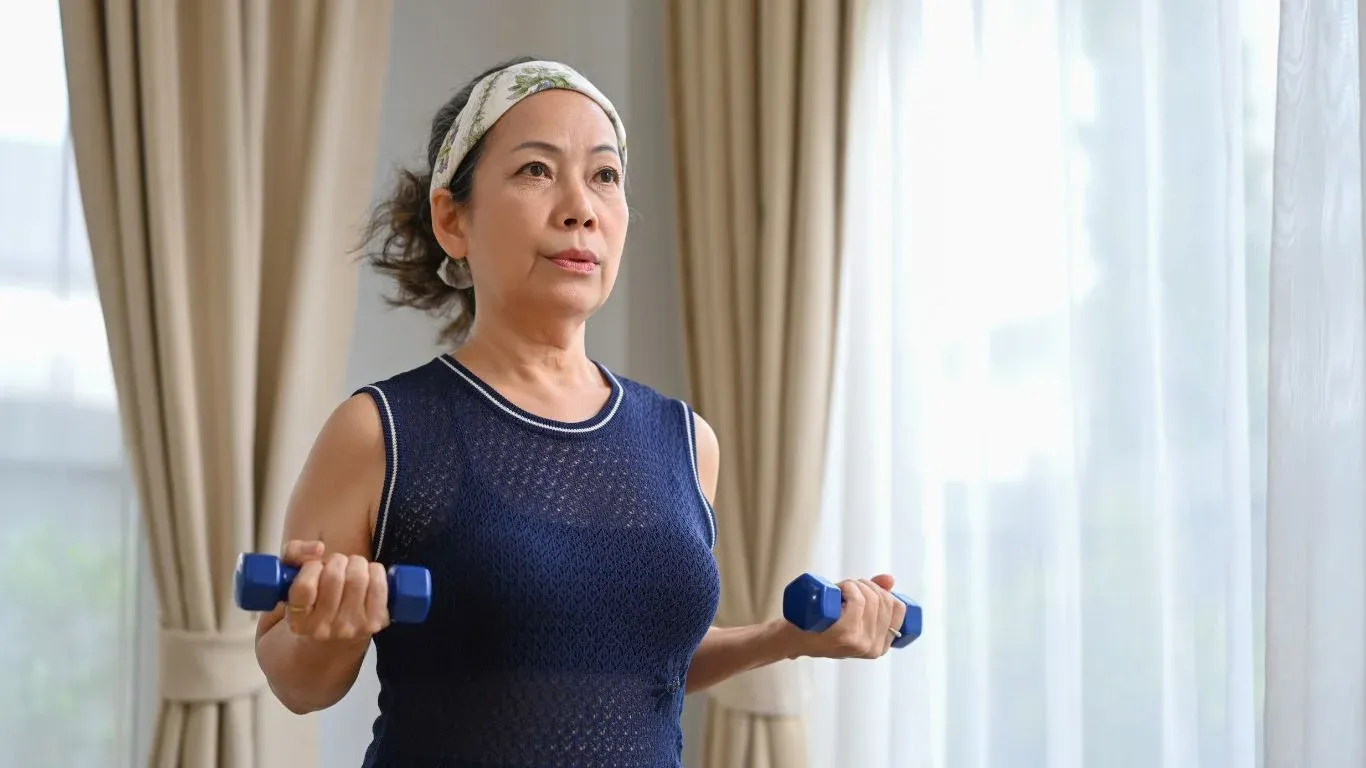
If you've ever finished a workout and felt worse instead of better… if you're doing everything you did in your 30s and your body just isn't responding the same way… if you're exhausted for days after a spin class that used to leave you energized — I want you to know something important.
You are not lazy. You are not broken. And you are definitely not imagining it.
What you're experiencing has a name: exercise intolerance, and it is one of the most common — and most misunderstood — struggles I see in the women I coach who are 40 and beyond. It's also one of the most frustrating, because everything you were taught about exercise growing up seems to be working against you now.
I lived this. For years I pushed myself through workouts, believing that if I just tried harder, sweated more, and pushed longer, my body would respond the way it always had. Instead, I got more inflamed, more exhausted, and more discouraged. It wasn't until I stopped chasing the workout and started listening to what my body actually needed — the very first step of the LIGHT Method™ I now teach my clients — that everything started to shift.
So let's talk about what exercise tolerance really means, why it changes so dramatically in this chapter of life, and exactly what to do about it so movement can start working for you again instead of against you.
What Is Exercise Tolerance, Really?
Exercise tolerance is your body's capacity to handle physical activity and recover from it efficiently. It's not just about whether you can push through a workout — it's about how well your body bounces back afterward.
A body with healthy exercise tolerance:
Recovers within a day or two of a challenging workout
Sleeps well after exercising, not worse
Feels energized in the hours following a workout, not depleted
Doesn't experience excessive soreness, joint pain, or inflammation
Maintains steady mood and appetite, without crashes or intense cravings
When exercise tolerance is low, your body has a much harder time absorbing the stress of a workout and turning it into strength, muscle, and resilience. Instead, that stress lingers. It shows up as fatigue that doesn't resolve, joint pain that seems to come out of nowhere, poor sleep, stubborn weight around the midsection, and a nagging feeling that your body has become a stranger to you.
If that sounds familiar, please hear me: this is not a willpower problem. This is a physiology problem — and physiology responds to the right support.
Why Exercise Tolerance Changes So Much After 40
Here's what nobody tells you in your 20s and 30s: exercise is a stressor. A good one, when dosed correctly — it builds strength, resilience, and longevity. But it is still something your body has to recover from, and recovery depends heavily on your hormonal and nervous system state.
As we move through our 40s and into perimenopause and menopause, several things shift at once, and together they change how much exercise stress your body can actually handle.
1. Cortisol Becomes More Reactive
Cortisol is your primary stress hormone, and intense exercise is one of the biggest cortisol triggers there is. In your 30s, your body could spike cortisol during a workout and clear it efficiently afterward. In midlife, especially when estrogen and progesterone are fluctuating or declining, your cortisol response becomes more exaggerated and slower to come back down.
This means the same HIIT class or hour-long run that used to leave you feeling accomplished can now leave your nervous system stuck in "fight or flight" for hours — sometimes days. That's why so many women tell me they feel wired but exhausted after workouts, or that they can't fall asleep the night of a hard training session.
2. Estrogen's Protective Role Declines
Estrogen does far more than regulate your cycle. It plays a major role in muscle repair, joint lubrication, inflammation control, and even how efficiently your muscles use glucose for fuel. As estrogen declines during perimenopause and menopause, your joints may become more sensitive to impact, your muscles may take longer to repair after exertion, and inflammation can linger longer after a workout than it used to.
This is a huge, underappreciated reason so many women in midlife develop new aches, tendon issues, or joint pain that seems to appear out of nowhere, even though nothing about their routine has changed.
3. Your Nervous System Is Likely Already Taxed
Most of the women I work with aren't just dealing with hormone shifts. They're also juggling careers, aging parents, teenagers or young adult kids, relationships, and a mental load that never really turns off. Add mold exposure, chronic gut issues, or unresolved stress from the past — like I dealt with myself — and you have a nervous system that is already running on a partially full tank before you even step into the gym.
When your nervous system is already taxed, adding a high-intensity workout on top of it isn't neutral. It's another demand on a system that's already stretched thin, and your body will let you know through fatigue, poor recovery, and stalled results.
4. Blood Sugar Regulation Becomes Less Forgiving
In your 20s and 30s, your body could handle blood sugar swings from intense exercise with relative ease. In midlife, insulin sensitivity naturally shifts, which means intense exercise on an empty stomach, or without proper fueling, can cause bigger blood sugar crashes — leading to shakiness, intense hunger, sugar cravings, and energy dips a few hours after a workout.
5. Gut Health and Inflammation Play a Bigger Role Than You'd Think
If your gut is inflamed or out of balance — something incredibly common in midlife, especially for those of us who've dealt with mold exposure, chronic stress, or years of "eating clean" without ever addressing the root cause — your body is already managing a low-grade inflammatory load. Exercise, especially intense exercise, adds to that inflammatory load temporarily. A well-functioning gut and body can handle that easily. An already inflamed system cannot, and that's often where post-workout soreness, puffiness, and fatigue come from.
6. Mold and Mycotoxin Exposure Can Quietly Wreck Your Exercise Tolerance
This one is deeply personal to me, and it's a piece I rarely see talked about when people discuss exercise struggles in midlife. Mold and mycotoxin exposure can be a hidden root cause of exercise intolerance, and it's one that gets missed constantly because the symptoms look like "just getting older" or "just being out of shape."
When your body is dealing with mold toxicity, your immune system is in a near-constant state of activation, your detox pathways are overwhelmed, and your inflammatory load is already high before you ever lace up your sneakers. Add exercise on top of that — even moderate exercise — and your body can react in ways that feel completely disproportionate: crushing fatigue that lasts for days, brain fog after a workout, unexplained muscle or joint pain, a racing heart during activity that used to feel easy, or a "crash" hours later that leaves you unable to function.
I lived this myself. I dealt with mold exposure four different times, and there was a period where even a short walk or a light workout left me feeling like I'd been hit by a truck. It wasn't weakness, and it wasn't aging — it was my body screaming that it was already overloaded and simply didn't have the capacity to handle one more stressor. Once I addressed the mold and supported my body's detox and inflammatory response, my ability to move and recover came back.
If you've ruled out the more "typical" explanations for your exercise intolerance — hormones, sleep, overtraining — and you're still struggling, especially if you've had water damage in your home or workplace, or you notice your symptoms improve when you're away from a certain building, mold is worth investigating as a root cause.
The Biggest Mistake I See Women Over 40 Make With Exercise
The biggest mistake isn't working out too little. It's working out in a way that no longer matches what their body can actually recover from.
So many of us were raised on a "no pain, no gain" mentality. We learned that more intensity, more sweat, and more soreness equaled more results. That mindset served many of us for years — and then, seemingly overnight, it stopped working. Worse, it started working against us: more inflammation, more fatigue, more stubborn weight, more frustration.
I see this pattern constantly with my clients before we start working together: they're doing hour-long high-intensity classes five or six days a week, running on caffeine and willpower, and wondering why they feel more exhausted and inflamed than ever, and why the number on the scale won't budge no matter how hard they push.
The truth is, in this season of life, more is not always more. Sometimes more is exactly what's keeping your body stuck.
Signs Your Exercise Routine Has Outgrown Your Body's Tolerance
Here are some of the signals I ask my clients to pay attention to. If several of these sound familiar, it's a sign your current routine may be creating more stress than your body can currently absorb:
You feel wiped out for the rest of the day after working out, instead of energized.
Your sleep gets worse, not better, on days you exercise intensely.
You're more sore than usual, and it lasts longer than it used to.
You feel puffy, inflamed, or "swollen" after workouts.
Your motivation to move has quietly disappeared, even though you used to love it.
You've plateaued or even gained weight despite exercising consistently.
You feel wired and anxious after workouts instead of calm.
Your joints ache in ways they never used to.
You're relying on caffeine or sugar to get through your workouts.
You feel disproportionately wiped out, foggy, or achy after only mild activity, especially if you've had water damage in your home or workplace.
If this is you, please know — this doesn't mean you should stop moving your body. It means your body is asking for a different kind of movement, and possibly, a different relationship with movement altogether.
How to Rebuild Exercise Tolerance and Work With Your Body Again
This is where I get to share the good news: exercise tolerance is not fixed. It can absolutely be rebuilt, and when it is, movement starts to feel good again — energizing instead of depleting, strengthening instead of exhausting.
Here's where I always start with my clients.
1. Start by Listening to Your Body
This is the first pillar of the LIGHT Method™ I use with every woman I coach, and it's the most important place to begin. Before changing a single workout, I ask my clients to start tracking how their body actually responds to movement: energy levels afterward, sleep quality that night, soreness the next day, mood, cravings, and hunger.
This isn't about judgment. It's about data. Your body has been trying to tell you what it needs for a long time — most of us have just been trained not to listen.
2. Prioritize Strength Training Over Constant Cardio
Muscle is one of the most protective things you can build in midlife. It supports metabolism, blood sugar regulation, bone density, joint stability, and hormone balance. Yet so many women over 40 are still centering their routines around cardio and high-intensity classes while strength training gets squeezed in as an afterthought, if at all.
Two to three sessions of resistance training per week, done with good form and adequate recovery between sessions, does more for your long-term energy, body composition, and hormone health than daily high-intensity cardio ever will.
3. Respect Recovery as Part of the Program, Not the Absence of One
Recovery isn't laziness. Recovery is when your body actually adapts and gets stronger from the stress you put on it. Without it, you're just accumulating stress with nothing to show for it. This means real rest days, prioritizing sleep, and not stacking intense workouts back-to-back without giving your nervous system a chance to reset.
4. Match Intensity to Your Current Capacity, Not Your Past Capacity
This one is hard for a lot of women to hear, myself included at one point. The intensity that worked for you at 30 may not be the intensity your body can currently absorb and recover from at 45, 50, or 55. That doesn't mean you're less capable — it means your body's needs have changed, and your training needs to change with it.
For many women, this looks like replacing some high-intensity sessions with strength training, walking, mobility work, or gentle movement like yoga — not because they can't handle intensity forever, but because rebuilding tolerance often requires reducing the load first so the body can recover and adapt, before intensity is reintroduced.
5. Fuel Your Body Properly Around Exercise
Exercising in a fasted state or under-fueled, especially with high intensity, tends to backfire more in midlife than it did before. Supporting blood sugar with adequate protein and balanced meals around your workouts helps your body handle exercise as the productive stress it's meant to be, rather than an additional crisis for your nervous system to manage.
6. Address What's Happening Underneath
Sometimes low exercise tolerance isn't just about the workout itself — it's a symptom of something deeper: unresolved gut issues, hormone imbalance, chronic inflammation, unresolved mold exposure, or a nervous system that's been stuck in survival mode for years. This is exactly the kind of root-cause work I walk my clients through using the LIGHT Method™, because no amount of adjusting your workout schedule will fully fix exercise intolerance if the underlying inflammation or hormone imbalance never gets addressed.
Movement Should Give You Energy, Not Take It Away
Here's what I want you to take from all of this: the goal was never to punish your body into results. The goal is to build a relationship with movement where your body feels supported, strong, and energized — not depleted and inflamed.
When I finally stopped forcing my body to do what it used to do, and started giving it what it actually needed in this season of life, everything changed. My energy came back. My sleep improved. My joints stopped aching. And movement, instead of being one more thing I dreaded, became something that genuinely made me feel like myself again.
That same shift is available to you.
Frequently Asked Questions About Exercise Tolerance After 40
Even if your workout hasn't changed, your body has. Declining estrogen, a more reactive cortisol response, gut inflammation, and an already-taxed nervous system all reduce your capacity to recover the way you used to, which means the same workout creates a bigger stress response than it did years ago.
Not necessarily. It means intensity needs to be matched to your current recovery capacity, and often reintroduced gradually after your body has had a chance to rebuild its tolerance through strength training, proper fueling, and nervous system support.
Walking, especially combined with regular strength training, is far more powerful than most people realize. It supports blood sugar regulation, reduces cortisol, and builds an aerobic base without overwhelming your recovery capacity, making it an excellent foundation for many women rebuilding exercise tolerance.
This varies from woman to woman, depending on how depleted the nervous system is, what's happening hormonally, and whether there are underlying issues like gut imbalance or unresolved inflammation. Many of my clients start noticing improved energy and recovery within a few weeks of adjusting their approach, with deeper shifts continuing over the following months.
Absolutely. Estrogen, progesterone, and cortisol all play direct roles in inflammation, muscle repair, and how your nervous system responds to physical stress, which is why exercise recovery so often changes during perimenopause and menopause.
You Don't Have to Figure This Out Alone
If you're exhausted by workouts that used to energize you, frustrated by a body that isn't responding the way it once did, or simply unsure what movement should even look like for you right now — I'd love to help you figure it out.
Using my signature 5-step LIGHT Method™, we'll look at what's really going on underneath the surface — your hormones, your gut, your nervous system, and your current habits — and build a plan that works with your body instead of against it.
You don't have to keep pushing through workouts that leave you depleted. Your body isn't asking you to do less — it's asking you to do it differently. And once you learn how, you'll be amazed at how good movement can feel again.
Ready to begin your journey?

Nationally Board Certified Health and Wellness Coach, NBC-HWC
Certified Functional Medicine Health Coach, FMCHC
Midlife Hormone Mastery Coach
"Helping women overcome hormone imbalance & gut issues naturally."





Copyright © 2023-2026 Be Well Health Coaching, LLC | All Rights Reserved | Privacy Policy | Disclaimer